

MUSEUM OF TEACHING AND LEARNING
  • HOME
  • What We Do
    • Artifacts >
      • Artifact of the Month
      • Artifact Group and Index
    • Exhibitions >
      • Your Baby's Amazing Brain
      • A Class Action >
        • Exhibition Layout
        • Manuscript and Photographs
        • Artifacts
        • Recordings and Documentary
        • Docent Support
        • Classroom Materials
        • Suggested Events
        • Marketing Materials
        • Venues
        • What People Are Saying
        • Acknowledgements
      • Memories of Mexican Schools Listening Station
      • Two Roads, One Journey >
        • Objectives
        • Our Audience
        • The Experience
        • Exhibition Floor Plan
        • Venues
        • Creative Team
      • Past Exhibitions
    • Podcasts
    • Programs >
      • Artifact Collection
      • Artifact Group and Index
      • Learn
      • Bookshop
      • Resources
  • About Us
    • About MOTAL
    • Our History
    • Board Members
    • Behind the Scenes
    • Events
  • Contact
  • End-of-Year Campaign

We Educate People About Education

DONATE
MEMBERSHIP
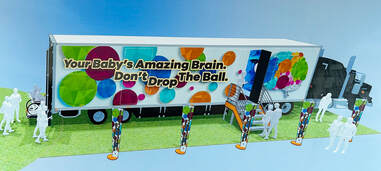
Your Baby's Amazing Brain
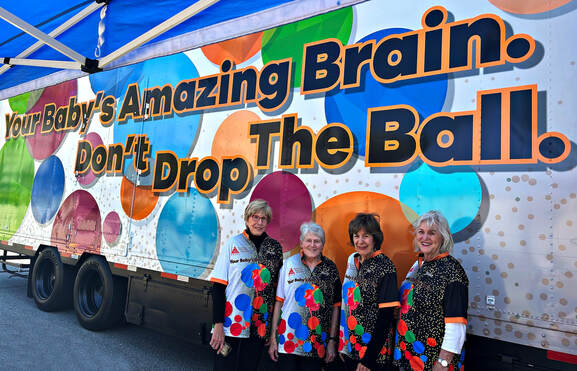
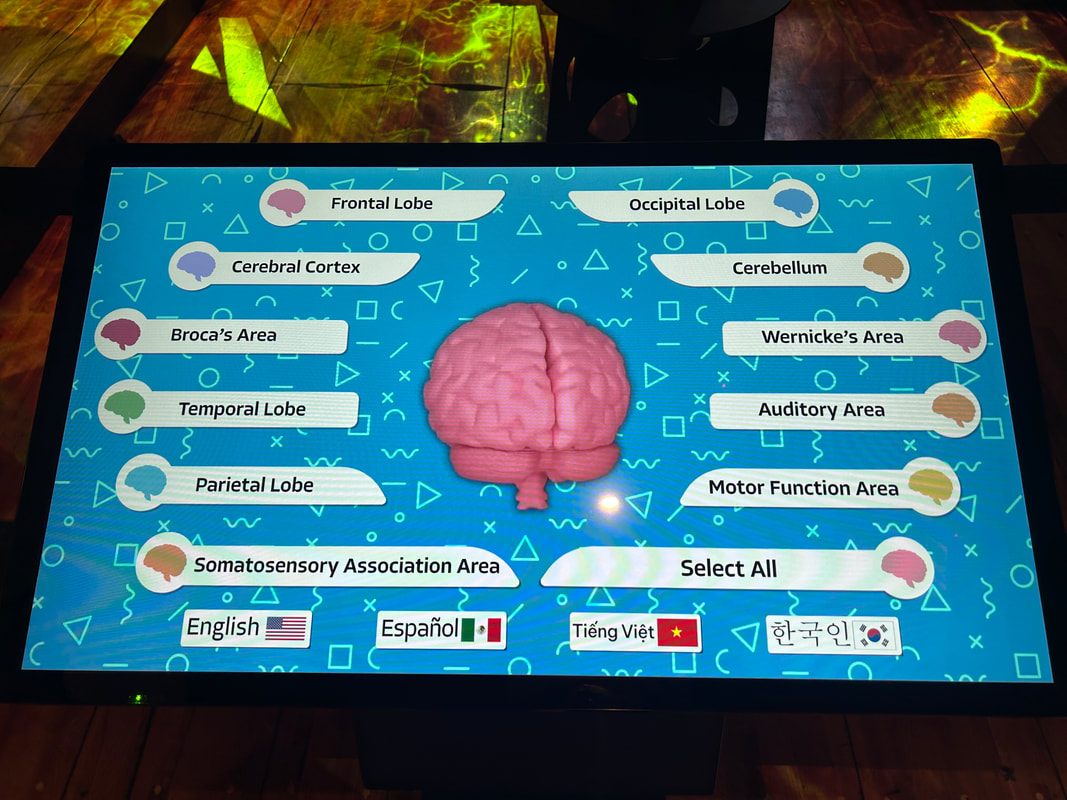
​The exhibition, Your Baby’s Amazing Brain is a 48-foot, traveling, walk-thru, interactive mobile exhibition designed to showcase the importance of developing minds in babies, infants and toddlers from birth up to age 5.
Plan Your Visit!


Upcoming Events

Picture

What We Do

Picture
Picture
Picture
Picture
Picture
Picture
Picture
Picture
Picture
Picture
Picture

Encore Encore!

Picture

A man whose speech was compromised went into a store to buy a new mobile phone. He wrote a note that described his situation and made his request. Alas, the note was in cursive handwriting and the young adult at the counter confessed that he could not read the writing. He had to rewrite the message in manuscript letters. This is just one small example of the the younger generation's diminishing abilities to read and write cursive handwriting. Does it matter in the 21st century?

It turns out to be a topic that evokes opinions on all sides. Cursive disappeared from the Common Core standards in favor of teaching typing skills. Twenty-seven states now have laws mandating cursive writing instruction in schools. In California, cursive was reintroduced into the state's curriculum due to Assemblywoman Sharon Quirk-Silva's efforts. She authored Assembly Bill 446 which required schools to teach handwriting, specifically cursive and joined italics, to children in grades one to six. The bill was signed into law on October 13, 2023 and implemented on January 1, 2024

On April 16, 2026, the Museum of Teaching and Learning hosted an event entitled, "Celebrating Cursive" with Assemblywoman Sharon Quirk-Silva. Guests came together to learn how AB 446 became law and asked questions about the process. Attendees also had a chance to practice their handwriting with the help of coaches.
Picture
From top left to right: Board Member, Cheryl Stewart and guests, Elise and Danny Torres, and Fran Mathews practice their cursive skills at last night's event.
 Read on for more information about the importance of handwriting.

Throughout history, the ability to write by hand has been cherished. Vivid evidence can be found from ancient Egypt, from Europe’s Middle Ages and Renaissance, as well as from many other regions and eras throughout the world. Later, within colonial America, people who could produce pages of careful, often beautiful, writing were respected. Cursive advocates want our citizens to have the ability to read the cherished documents that marked the founding of our nation; the Declaration of Independence and the Constitution were produced and copied BY HAND. Lincoln’s Gettysburg Address was written in his own cursive hand. By the way, it was predominantly men of high status who could write. Women and others considered to be lower in status were not instructed until much later.

In American schools during the years from 1840 up through the 1980s, children were expected to learn cursive handwriting. It was part of the curriculum in the many rural schools that were dotted across the nation in the 19th century. Spencerian was the type of letter formation until Palmer method became the norm by the 20th century and then along came the slightly different Zaner-Bloser style and the unusual D’Nealian method.

The advent and popularity of various typewriters did not much alter the expectations for children to learn cursive. Even when the surge toward typing came with the inventions and improvements of the typewriter, typing had its place and handwriting had its place. Students entering third grade (or sometimes second) were excited about “getting” to learn cursive handwriting. It was a rite of passage up through the 1980 and beyond. Typing was usually not acquired as a skill until students were in their teens. The eventual takeover of computers, however, DID make a difference. School districts started to drop handwriting as a graded subject and teachers who savored their children’s handwriting were often seen as old-fashioned. Cursive had a slow, but certain, demise that was clinched by the fact that the Common Core standards excluded handwriting. 

But then there were concerns. People started to ask questions about what might be lost with the demise of cursive. Those individuals were not necessarily all stuffy, stuck-to-the-past Luddites. Some advocates were interested in the neurological relationships of handwriting to thought and memory. Studies in various parts of the world seem to have confirmed the importance of cursive hand motions’ neural connections to better thinking and remembering.
See the attached PDF article - "The Science of Handwriting" by Brandon Keim - from 2013 Scientific American Mind September/October.

There is also some evidence that mastering automatic abilities at cursive in the earliest primary years can predict competence in writing and spelling in future grades as noted in the article entitled, "Teaching of Cursive Writing in the First Year of Primary School: Effect on Reading and Writing skills," (https://www.ncbi.nlm.nih.gov/pmc/articles/PMC6366728).  Anecdotal evidence abounds. Psychologists report that their professional training stressed journaling as an important strategy to use with clients. The ability to reflect and alter behaviors were most evident with journaling done in cursive writing.

As expectations for cursive instruction are being re-established in various states, some advocates coming from a viewpoint that it is patriotic and an American thing to do. Others see it as an art form that can gratify. Many think it is a smoother, faster way to record thoughts, hailing back to the linguistic roots of the word cursive from the Latin currere, “to run.” And some think it is a generational thing, with boomers and millennials on opposite sides of the fence, pro and con.

The Museum of Teaching and Learning is not convinced that the cursive research is scientifically adequate for us to base a solid recommendation, but as a museum, we ARE preservationists. We want to retain cursive writing abilities (along with thank you notes, letter writing, and distinctive signatures). We can say for certain that we agree with the educators and psychologists who see positive outcomes from thoughtful journal writing. And furthermore, the ability to READ cursive is important as families examine ancestors’ letters, journals, and documents and public historians examine, analyze, and share wonderful archives from the past.

As always, we love to hear from YOU, our readers. What are your thoughts about the cursive controversy?

References:
Teaching of Cursive Writing in the First Year of Primary School: Effect on reading and writing Skills https://www.ncbi.nlm.nih.gov/pmc/articles/PMC6366728
Cursive Seemed to Go the Way of Quills and Parchment. Now It’s Coming Back. https://www.nytimes.com/2019/04/13/education/cursive-writing.html
Is cursive writing important to child development? https://bigthink.com/personal-growth/cursive-important-child-development?rebelltitem=1#rebelltitem1

Submitted by Greta Nagel
MOTAL President and CEO

P.S. This writer grew up in Chicago during the 1950s when Palmer method lessons were still done with dip pen and ink. We dipped our pens—slender wooden holders with metal nibs—into black ink that our teacher had carefully poured into our metal inkwells, one by one. The inkwells fit into round holes located in the upper right corners of our wooden desks. Ballpoint pens were available, but were slow to come into common usage. And at home, our parents always wrote with fountain pens . . . in cursive.
 We educate people about education.

      Funded Project Announcement Video:
     Your Baby's Amazing Brain

Picture
WE ARE LOOKING FOR DONORS
The high-tech mobile museum
​Your Baby's Amazing Brain
Picture
Click Here for Next Venue
MOTAL Creates Traveling Exhibitions
that are leased by institutions such as
museums, libraries, schools,
and universities.
If you would like more information

Email HERE
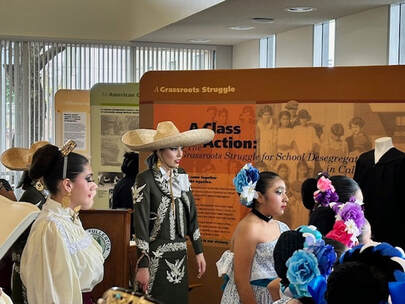
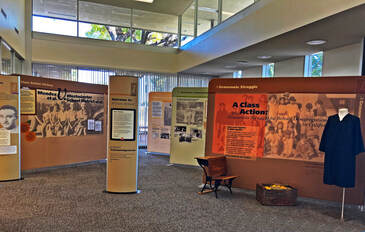
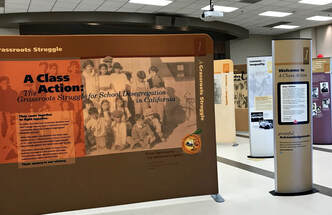
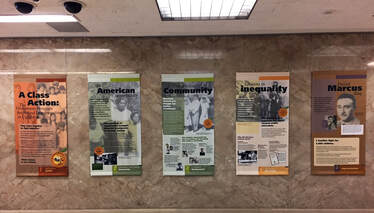
A Class Action:
The Grassroots Struggle
for School Desegregation in California

Traveling Exhibition
CLICK HERE to find out more!
Picture
We also have a Hanging Version!
Picture

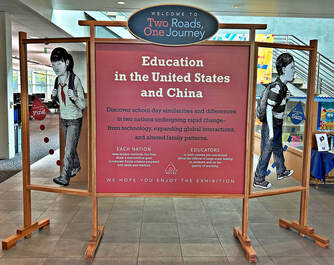
Two Roads, One Journey:
Education in China and the U.S
Traveling Exhibition
 
CLICK HERE to find out more!
Picture
Here is a direct Link to our
MOTAL YouTube Channel:

MOTAL - The Museum of Teaching and Learning
Picture
 While you are there, please click
on the SUBCRIBE button which is FREE!
Like, Follow, and Subscribe!
Subscribe to receive our Articles and Newsletters CLICK HERE

Copyright © 2011– Museum of Teaching and Learning. 
​All rights reserved. Disclosures.
247 E Amerige Avenue Fullerton, CA 92832​, USA

  • HOME
  • What We Do
    • Artifacts >
      • Artifact of the Month
      • Artifact Group and Index
    • Exhibitions >
      • Your Baby's Amazing Brain
      • A Class Action >
        • Exhibition Layout
        • Manuscript and Photographs
        • Artifacts
        • Recordings and Documentary
        • Docent Support
        • Classroom Materials
        • Suggested Events
        • Marketing Materials
        • Venues
        • What People Are Saying
        • Acknowledgements
      • Memories of Mexican Schools Listening Station
      • Two Roads, One Journey >
        • Objectives
        • Our Audience
        • The Experience
        • Exhibition Floor Plan
        • Venues
        • Creative Team
      • Past Exhibitions
    • Podcasts
    • Programs >
      • Artifact Collection
      • Artifact Group and Index
      • Learn
      • Bookshop
      • Resources
  • About Us
    • About MOTAL
    • Our History
    • Board Members
    • Behind the Scenes
    • Events
  • Contact
  • End-of-Year Campaign